
How to Check Double-Glazing Thickness Safely
The overall thickness of a sealed double-glazed unit is not the same as the thickness of either glass pane. Measure for an enquiry, but leave glass removal and final ordering dimensions to a qualified glazier.
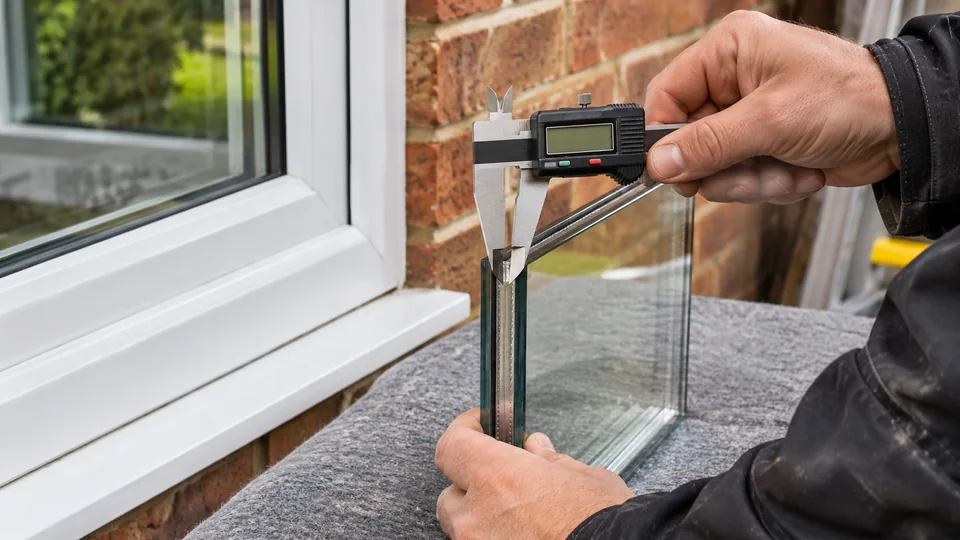
What does a double-glazing thickness measurement include?
A sealed unit has two glass sheets separated by a spacer and a sealed cavity. Manufacturers describe the build-up in millimetres—for example, glass / cavity / glass—but the complete unit also has edge seals that are not visible once it is held in a window frame. Different build-ups can look almost identical from across the room.
Do not assume that the unit is a particular thickness simply because the surrounding window is uPVC or was installed in a certain decade. A replacement must suit the glazing beads, gasket pressure, drainage details and any required safety or acoustic specification.
What you can check without taking the glass out
Photograph the window straight on and at an angle, noting any marks or labels on the unit or frame. Record the approximate visible pane width and height, which side opens, frame material and whether the glazing is toughened, patterned or laminated. A previous installation document may include the precise unit make-up.
If you have no safe access to an exposed unit edge, do not prise out glazing beads or push a caliper against unsupported glass. Incorrect removal can break the unit, damage seals or create an injury risk. A professional can measure the complete unit during a site visit.
Why thickness matters when replacing glass
A unit that is too thick may not seat correctly under existing beads; one that is too thin may not compress the seals or fit securely. The glass build-up also affects weight, thermal performance and sometimes sound reduction. Matching the old thickness is not always enough if safety requirements or the frame system have changed.
Ask a glazier to identify glass thickness, cavity width, coating, spacer details and whether safety glazing is required. For door panels and low-level glazing, the specification should be checked against current applicable requirements, not copied from an old pane without assessment.
Separate glass-only quotations from window prices
For a glass-unit replacement quote, send the glazier photographs and the approximate dimensions, explain the problem and ask what the final survey will cover. Confirm whether removal of the old unit, disposal, access equipment and VAT are included. Avoid ordering a unit from rough measurements alone.
If the frame itself is failing, compare that job with a glass-only replacement and then use our calculator for the complete-window alternative. The calculator does not infer sealed-unit thickness from photos.
One more thing worth checking
If several units need replacement, label every photograph with the room and approximate dimensions. Similar-looking panes can differ in safety glass, tint or spacer colour. A written schedule helps the glazier avoid confusing a bedroom unit with a door panel that needs a different glazing specification.
Never remove a sealed unit simply to find its thickness. Photographs and a glazier’s survey are safer and more useful than an uncertain DIY measurement.
Questions homeowners ask
Can I tell unit thickness by looking at the spacer?
Usually not with enough confidence to place an order. Have a glazier confirm the full make-up.
Is the width of the glass bead the unit thickness?
No. Frame and bead geometry do not directly give a reliable sealed-unit thickness.
Does the calculator price individual glass units?
No. It estimates whole replacement windows and doors, not a glass-unit supply-and-fit job.
Related guides
Further reading
External guidance for the technical issues covered in this article. Always confirm the product and requirements for your home.
Know what your quote should cost
Compare an independent estimate before you book installers. Choose the windows and doors that suit your home, then check the expected fitted price range.
Use our Quote Calculator →