
Bifold Door Glazing Options: What to Choose and Why
The glass in a bifold door affects warmth, glare, safety, security and the weight carried by the hinges. Choosing the right glazing is about the complete doorset and the way you use the room—not simply buying the most expensive panes.
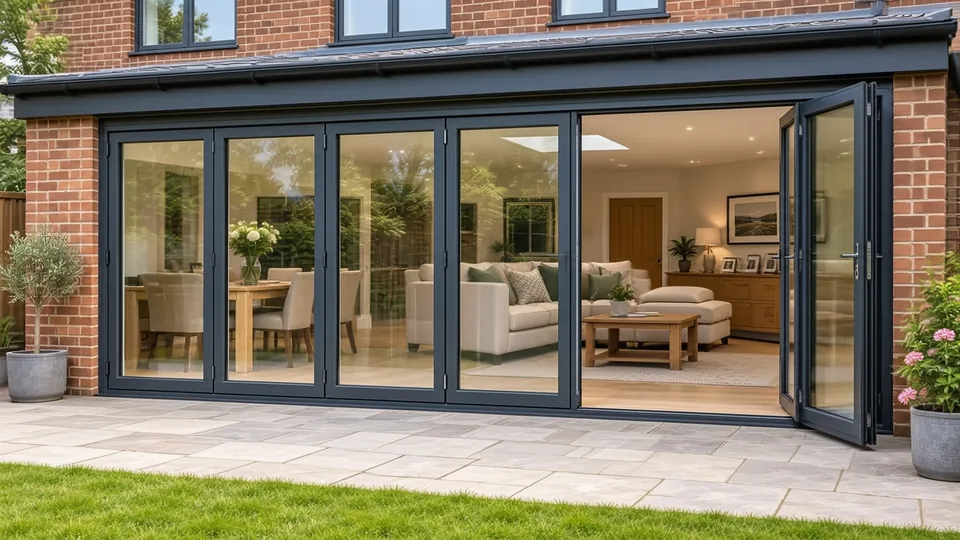
Start with the complete door specification
A bifold door is more than a set of separate panes. Its frames, insulated glass units, seals, hinges, rollers and threshold all work together. If an installer advertises “high-performance glass”, ask what the whole doorset actually achieves. A good glass centre-pane figure is not necessarily the same as the thermal performance of the completed doors.
The right starting point is the orientation of the opening, how often the room gets hot or cold, whether noise is a problem and the practical size of each folding leaf. A south-west-facing extension with large afternoon sun exposure may need a different solution from a shaded, north-facing kitchen.
Standard double glazing for bifolds
Many external bifolds use insulated double-glazed units. These comprise two panes separated by a sealed cavity and can be specified with coatings and gas fillings to improve performance. The frame's thermal break, edge details and installation quality matter too; asking only for “double glazing” does not tell you enough about insulation.
Ask for the whole-door U-value, the exact system name and whether the quoted glass meets the applicable safety requirements. Different product ranges may offer different sightlines, glass thicknesses and maximum panel sizes.
Know what your quote should cost
Add your windows and doors using our interactive calculator before getting quotes. See what you should expect to pay and potentially save thousands by avoiding an overpriced quote.
Use our Quote Calculator →Fitting & VAT included · No sales callsIs triple glazing worth the upgrade?
Triple glazing adds another pane and cavity, and it can improve thermal performance when the complete door is designed for it. It also increases unit thickness and often weight, which may affect maximum leaf dimensions and the hardware specification. Some bifold systems cannot accept every triple-glazing option without changing the frames or permissible panel sizes.
Before paying more, compare quoted whole-door performance, the room's existing insulation and how much of the glazing is actually exposed. A well-fitted double-glazed doorset may be an appropriate choice; triple glazing is not automatically the best value for every home. Our double versus triple glazing guide explores the broader price trade-off.
Solar-control glass for sunny rooms
Large openings can admit strong sunshine even in the UK. Solar-control glazing can reduce the amount of solar heat entering the room, but the exact effect depends on the product and orientation. Blocking more heat may be desirable in an overheating summer extension yet less attractive in a cool, shaded room where you value winter sunshine.
Ask for comparable specifications and a clear explanation of the glass's solar-energy transmission. Consider roof lights, blinds, shading and ventilation alongside the door glazing. Changing one element rarely solves a difficult overheating problem on its own.
Safety glazing and security are not identical
Full-height glass in doors and adjacent critical locations requires suitable safety glazing. Toughened glass is designed to break into smaller pieces, while laminated glass contains an interlayer that can retain fragments after impact. Products and configurations vary, so the installer should explain which glass is proposed and why.
A safety-glass description on its own does not prove that the doorset meets a security standard. If security is important, ask about the tested complete product, locking hardware and installation details. Our glazed door security checklist explains the difference in more detail.
Acoustic glazing and privacy choices
If road noise is a concern, ask about the entire door's sound insulation and the likely paths of air leakage. Different glass thicknesses or laminated acoustic interlayers can affect performance, but a poorly sealed threshold may undo much of the benefit. Curtains, blinds and wall insulation can also influence the result once the doors are installed.
Tinted or patterned glass can offer privacy in some situations, although most garden-facing bifolds are designed for a clear outward view. Check any tint by viewing real samples against daylight rather than judging a computer picture.
What changes the price of bifold glazing?
The area of glass, chosen safety specification, coatings, gas fill, manufacturer and whether the system supports thicker or heavier units can all affect the quote. Extras may change the panel dimensions or frame specification as well as the glass unit. This is why two similar-looking door sets can have noticeably different prices.
For a fair comparison, request written prices for an identical opening width, leaf count, frame system, opening direction, threshold and installation scope. Then ask the supplier to show a separate glazing upgrade price. If a structural opening needs changing, keep that item separate from the product cost.
Our window and door quote calculator can help you budget for complete fitted bifold doors and other replacements. It does not provide a certified thermal-performance assessment or a bespoke price for every specialist glazing upgrade.
Questions for your installer
- What is the whole-doorset U-value, not only the glass U-value?
- What safety-glass type is specified for each full-height pane?
- Is the frame system rated for the proposed glass thickness and weight?
- Would a different glazing option change the maximum panel width?
- Are solar-control or acoustic benefits supported by product information?
- Are all quoted glazing upgrades fully included with fitting and VAT?
- What glass and hardware warranties apply?
Frequently asked questions
Do bifold doors have to use toughened glass?
Safety glazing is generally needed in critical locations, but an installer may specify compliant toughened or laminated constructions depending on the system and requirements. Ask for the actual safety standard and product specification.
Will triple-glazed bifolds always be quieter?
Not necessarily. Noise performance depends on the glass make-up, seals and full doorset, not the number of panes alone.
Can I change the glazing later?
Replacement insulated units may be possible, but the available dimensions and weights are constrained by the existing frame. Confirm compatibility and likely cost before ordering a different glass specification.
Related guides
Further reading
Independent information on choosing suitable windows, glazing and doors: