
French Door Locks and Security: What to Check
French doors have two opening leaves, so a secure lock is only part of the picture. The fixed or inactive leaf, hinges, glazing and alignment all affect how the doors perform.
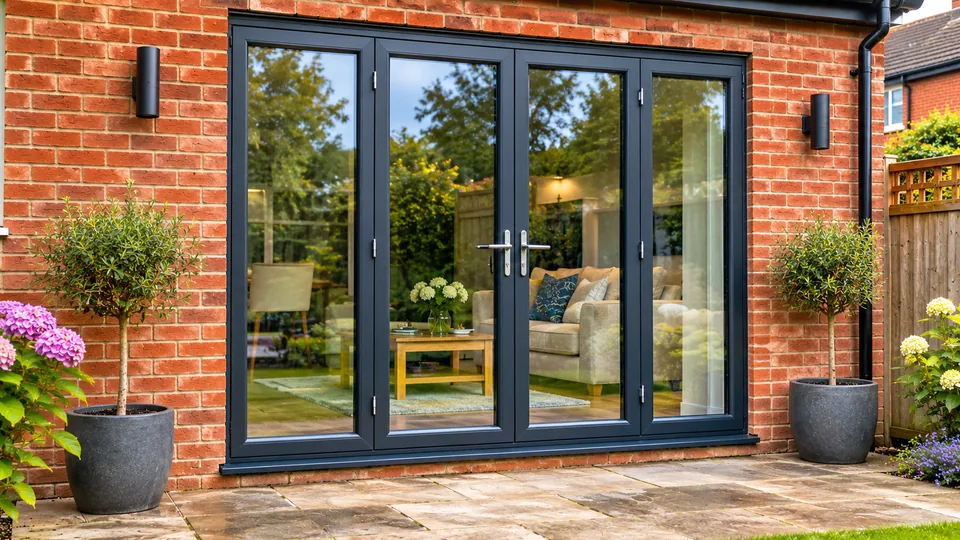
Two leaves mean two locking arrangements to check
On a set of French doors, one leaf is typically used most often while the second is released when a wider opening is needed. Ask the installer to demonstrate how the inactive leaf stays secured to the frame, both at the top and bottom where applicable. The main leaf may have a multipoint locking system, but it can only perform as intended when the rest of the doorset is correctly closed and aligned.
Some products differ in their handle layout and how the secondary leaf is operated. Ask to try the exact hardware before ordering, especially if several people in the household will use the doors.
Look beyond a 'high-security' label
Manufacturers may describe a lock as high-security without explaining whether the complete door assembly has been independently tested. Ask for the applicable test standard and certification for the supplied doorset. Lock cylinders, hinge security and the way the frame is fixed all deserve attention. A secure cylinder on a poorly mounted frame is not enough.
A good installer should also check that the leaves close without scraping, that all locking points engage properly and that the handles operate smoothly. These are everyday usability issues as well as security concerns.
Know what your quote should cost
Add your windows and doors using our interactive calculator before getting quotes. See what you should expect to pay and potentially save thousands by avoiding an overpriced quote.
Use our Quote Calculator →Fitting & VAT included · No sales callsDoes glass make French doors vulnerable?
Glazing is an expected feature of French doors, but not all glass assemblies have the same characteristics. Toughened glass is commonly selected for safety in doors and low-level glazing. Laminated glass has an interlayer that retains fragments after breakage and may form part of some security-rated designs. The exact specification matters more than the broad name of the glass.
Ask what glazing is included as standard, whether upgrades are available, and whether any claimed security performance relates to the whole installed doorset. If privacy matters, an obscured glass choice can reduce visibility without itself providing a security certification.
Installation and everyday use
- Test both leaves in their everyday and fully open positions.
- Ask how the inactive leaf bolts or locks into the frame.
- Check the threshold and weather seals for gaps.
- Verify how keys, cylinders and spare keys will be supplied.
- Ask for written product and installation warranty details.
Where doors open onto a small patio, security also involves practical design: projecting handles or a poor swing direction may encourage users to leave a leaf partly secured. Choose an arrangement that is easy to close correctly every time.
Comparing quotes for replacement French doors
Compare identical widths, frame materials, glazing, colour, thresholds and hardware. Ask about removing the old doors, making good, sealing and disposal. Our quote calculator is intended to help estimate complete fitted windows and supported door products, not to assess lock upgrades or security compliance independently.
Are French doors less secure than sliding doors?
Neither type is automatically safer. Compare the tested doorset specification, frame fixing and locking arrangement rather than relying on opening style alone.
Should both French-door leaves have handles?
That varies by design. Ask for a demonstration and confirm how the second leaf can be released safely when a wider opening is needed.
Related guides
Further reading
Independent information to help check product and installation decisions: